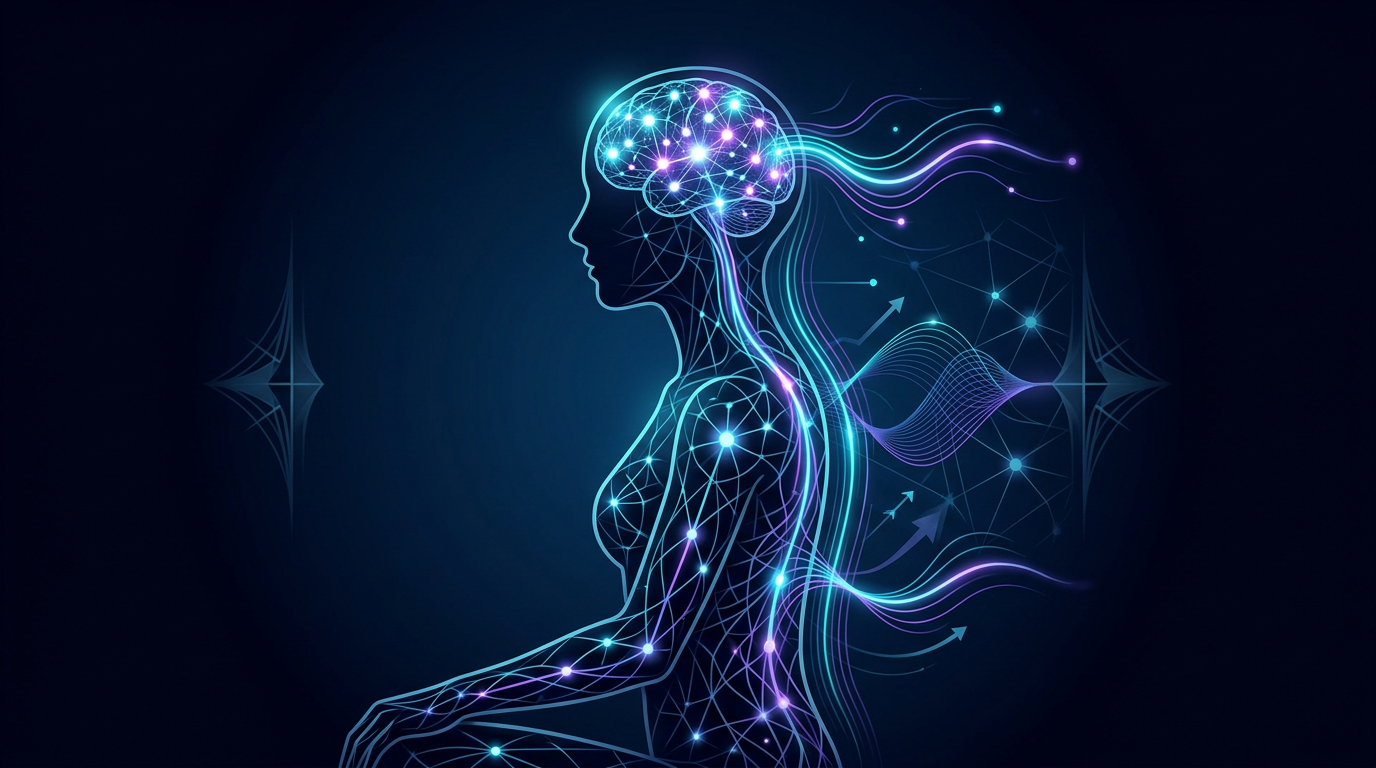
Posture Reigns: Decipher the Secret Code Between Emotions and Movement to Reset Your Life
    Gestione Emozioni18 minMarch 14, 2026

    Posture Reigns: Decipher the Secret Code Between Emotions and Movement to Reset Your Life

    TITLE: Posture Reigns: Decipher the Secret Code Between Emotions and Movement to Reset Your Life...

    Condividi

    Key Takeaways

    • TITLE: Posture Reigns: Decipher the Secret Code Between Emotions and Movement to Reset Your Life...
    • Remember, the key is awareness and intentional repetition.
    • the key to your transformation.
    • remember a client, let's call him Marco, a successful professional trapped in a cycle of anxiety and insomnia.

    The sun hasn't risen yet, yet you feel a density in the air, a weight you can't define.

    Your eyes open with difficulty.

    The first sensation that washes over you is a pervasive exhaustion, as if sleep had not regenerated you at all...

    Amedeo Sbardellotto guides you to reprogram your brain for optimal well-being and performance.

    Imagine any given morning.

    The sun hasn't risen yet, yet you feel a density in the air, a weight you can't define.

    Your eyes open with difficulty.

    The first sensation that washes over you is a pervasive exhaustion, as if sleep had not regenerated you at all.

    You get out of bed, and immediately, a subtle contraction appears in your shoulders, a slight slump in your torso.

    Your back curves almost imperceptibly, your head leans forward.

    Not acute pain, but a constant tension, a physiological reminder that seems to whisper: "You can't do it."

    This is not just an ordinary awakening; it's a silent dance between your body and your mind.

    Every muscle fiber, every single nerve ending reflects an inner narrative.

    If you were to look in a mirror at that moment, you wouldn't just see someone a little sleepy.

    You would see the physical manifestation of an emotional state, of prolonged allostasis, of a nervous system in a slight, albeit constant, survival mode.

    Your posture, at that moment, is an authentic telegram that your brain sends to itself, a constant feedback loop that shapes every subsequent thought and action.

    For years, you believed that emotions were something ethereal, a purely mental phenomenon, disconnected from the rigor of physicality.

    You separated body and mind, relegating posture to a matter of aesthetics or, at most, pain prevention.

    You told yourself, "I'm stressed, so I slouch." You inverted and confused the cause-and-effect relationship, losing sight of the profound interconnection that governs every aspect of your existence.

    Today, I will demonstrate to you, unequivocally and based on solid scientific evidence, how your posture is not just a consequence of your emotions, but one of the most powerful levers at your disposal to reset every aspect of your life.

    It's no coincidence that Amedeo Sbardellotto, your certified Brain Coach, insists on this point: posture is the gateway to your nervous system, the primary language through which your brain shapes and empowers itself.

    The Speaking Body: Beyond the Surface of Movement

    For too long, we have accepted a reductionist view of the human body.

    We have seen posture as a simple "pose," something to be corrected with tedious exercises or, worse, to be ignored entirely.

    This perspective is not only limiting, but also profoundly harmful.

    Your body is not an inert machine; it is a dynamic and self-regulating system, constantly engaged in a bidirectional dialogue with your brain.

    Every muscle, every joint, every tendon is rich in receptors, called proprioceptors, which send an uninterrupted flow of sensory information to your central nervous system.

    This information is not just about position in space.

    It transmits detailed data on muscle tension, speed of movement, and applied force.

    It is the subtle language through which your body communicates your experience of the world.

    And here's the crucial point: this communication is not neutral.

    It is imbued with emotional meaning.

    When you are tense, worried, or overwhelmed by a crushing workload, your body reacts.

    Your shoulders rise towards your ears, your spine curves, the muscles in your neck and back stiffen.

    This is not a conscious decision; it is an automatic response, a primordial reflex of your autonomic nervous system.

    It's your body entering protection mode, ready to defend itself against a perceived threat, whether it's a predator in the savannah or an unmissable deadline at work.

    These postural patterns, maintained for hours, days, months, send an unequivocal message to your brain: "I am in danger.

    You need to activate a stress response." The brain, which is fundamentally a signal processor, receives this feedback and interprets it.

    It increases the production of cortisol, the stress hormone, and adrenaline.

    Your heartbeat accelerates, breathing becomes shallower and faster.

    You find yourself trapped in a negative feedback loop: your posture reflects your emotional state, and your emotional state is amplified and perpetuated by your posture.

    This is the concept of allostasis, your body's constant and dynamic adaptation to variable internal and external conditions.

    An acute allostatic response can be life-saving.

    But when it becomes chronic, when your body is constantly under perceived stress, the allostatic load can deplete your resources, leading to systemic inflammation, hormonal imbalances, and, yes, impaired cognitive and emotional abilities.

    Your posture is a powerful predictive indicator of your allostatic load.

    The Neurophysiology of Connection: How the Brain Translates Posture

    We are not talking about a generic correlation; we are talking about a deep and structural neurophysiological link.

    Your brain does not distinguish between a real physical threat and a perceived emotional threat.

    For your limbic system, responsible for emotions, and for your brainstem, which regulates vital functions, a closed, hunched posture is synonymous with imminent danger.

    The Facial and Bodily Feedback Theory: This theory, widely validated by research, suggests that facial expression and posture are not just manifestations of emotions, but can also induce or amplify them.

    Put a pencil between your teeth to simulate a smile and your feeling of happiness will increase, even if only slightly.

    Similarly, straightening your back, holding your head high, and opening your shoulders can induce a sense of security, confidence, and calm.

    This occurs through several mechanisms:

    • Amygdala Activation: A curved posture can activate the amygdala, your brain's alarm center, increasing levels of anxiety and fear.

    An open and dominant posture, conversely, can inhibit this activity, promoting a sense of calm and control.

    • Autonomic Nervous System Regulation: Posture directly influences your autonomic nervous system, which is divided into sympathetic (fight or flight) and parasympathetic (rest and digest).

    A tense posture activates the sympathetic branch, keeping you in a state of alert.

    A relaxed and open posture promotes the activation of the parasympathetic branch, fostering relaxation and cardiac coherence.

    • Neurotransmitter Modulation: Posture can influence the release of key neurotransmitters.

    A "powerful" posture has been associated with an increase in testosterone levels (an indicator of dominance and confidence) and a decrease in cortisol (the stress hormone).

    This is not magic; it's biochemistry.

    It's your body sending signals to your brain, which then responds by altering your internal chemistry.

    The Vagus Nerve and Cardiac Coherence: The vagus nerve is a communication highway between the brain and body.

    Its tone is a fundamental indicator of your nervous system's ability to regulate emotions and stress.

    An open posture and deep diaphragmatic breathing stimulate the vagus nerve, improving your heart rate variability (HRV).

    High HRV is associated with greater emotional resilience, improved attention span, and reduced anxiety.

    This is the concept of cardiac coherence, a state of physiological balance where the heart and brain work in harmony.

    An upright posture and controlled breathing are powerful tools for inducing increased cardiac coherence.

    The Window of Tolerance: When Posture Helps You Stay Grounded

    The concept of the window of tolerance is fundamental to understanding stress and emotion management.

    Imagine an optimal range of autonomic arousal, where you are able to function effectively, cope with challenges, and maintain emotional regulation.

    When stress or trauma pushes you outside this window, you can go into hyper-arousal (anxiety, panic attacks, anger) or hypo-arousal (depression, numbness, dissociation).

    Your posture plays a crucial role in keeping you within this window.

    A rigid or excessively closed posture can signal a threat state to your brain, inducing a state of hyper-arousal.

    Conversely, a relaxed but upright posture, with a wide field of vision and fluid breathing, can significantly contribute to a sense of security, preventing you from sliding into hypersensitivity or anhedonia.

    Think of when you are under pressure.

    Your shoulders tense up, your jaw clenches.

    These are unequivocal signs that you are stepping out of your window of tolerance.

    Intervening on your posture, even for just a few minutes, can be a quick and effective way to return to that optimal balance zone.

    It's not a miraculous solution, but a powerful tool for immediate self-regulation.

    Self-Directed Neuroplasticity: Reprogram Your Brain with Conscious Movement

    Here we uncover the true potential of posture: its ability to generate self-directed neuroplasticity.

    The brain is not a fixed and immutable structure; it is an extraordinarily adaptable machine, capable of reorganizing and reconfiguring itself in response to experiences.

    And movement, particularly conscious and intentional movement, is one of its most powerful catalysts.

    For years, you've reinforced neural circuits associated with dysfunctional postures and limiting emotions.

    Every time you slumped in shame, stress, or fear, you carved a deeper groove in your neural network.

    But the good news is that you can reverse this process.

    You can intentionally create new movement patterns and, consequently, new thought and emotion patterns.

    This is the core of Brain Coaching with Amedeo Sbardellotto.

    We are not talking about "postural gymnastics" in the traditional sense.

    We are talking about an approach that integrates physical movement with cognitive awareness and emotional intention.

    How does this reprogramming process work?

    Deep Awareness: The first step is to develop a deep awareness of your current posture.

    I ask you not to judge, but merely to observe.

    How do you sit?

    How do you walk?

    What are the chronic tensions in your body?

    This observation is the starting point for any significant change. 2.

    Clear Intention: It's not enough to change posture mechanically.

    A clear intention is needed. "I want to feel more confident," "I want to lighten the emotional load," "I want to access my inner strength." This intention guides your attention and amplifies the effect of movement on your brain. 3.

    Conscious and Repeated Movement: Through specific, guided, and personalized exercises, you learn to move in ways that are physiologically "correct" but also emotionally "powerful." It's not just about stretching a muscle, but about feeling how that movement influences your breath, your heartbeat, your arousal level. 4.

    Neural Reinforcement: Every time you adopt a new posture, every time you move your body in a different and more functional way, you are activating new neural pathways.

    With repetition, these connections strengthen.

    It's like blazing a new trail in the forest: at first it's difficult, but then it becomes a well-worn, natural path.

    This process is not just physical.

    Every time you choose to "elevate" yourself physically and emotionally, you are fueling your dopaminergic drive.

    Dopamine, the neurotransmitter associated with reward, motivation, and pleasure, is crucial.

    When you feel an improvement in your emotional state thanks to a conscious change in posture, your brain registers that feeling as a reward.

    This creates a virtuous cycle: the better you feel, the more motivated you are to maintain the new posture, and the more your brain releases dopamine, reinforcing the desired behavior.

    The Postural Protocol for Emotional Resilience: Some Practical

    Examples

    I won't leave you with just theory.

    Here are some practical protocols you can start implementing right away to begin experiencing the power of posture.

    Remember, the key is awareness and intentional repetition.

    The Morning Reset: The Silent Warrior Pose

    As soon as you wake up, even before getting out of bed, take 3-5 minutes.

    • Intentional Stretching: Lying on your back, stretch your arms above your head, as if you want to touch the opposite wall of the room.

    Extend your legs, pointing your feet.

    Feel every inch of your body stretching.

    Inhale deeply, exhaling slowly.

    • Chest Opening: Bring your arms to your sides, palms facing up.

    Imagine your shoulder blades drawing slightly together, opening the chest area.

    Feel the expansion between your collarbones.

    • Deep Diaphragmatic Breathing: Place one hand on your abdomen and one on your chest.

    Inhale, feeling your abdomen rise, then your chest.

    Exhale slowly, first your chest, then your abdomen deflating.

    Repeat for 10-15 breaths.

    Focus on lengthening the exhalation.

    This stimulates the vagus nerve and promotes cardiac coherence right from the morning.

    • Powerful Visualization: As you breathe, visualize your spine as a strong, flexible tree extending upwards, firmly rooted.

    Imagine each vertebra lengthening and spreading out.

    The Desk "Quick Reset": The Confidence Posture

    During your workday, every hour, give yourself 60 seconds for this quick reset.

    • Foot Anchoring: Sit with your feet firmly planted on the ground, the soles of your feet in full contact with the floor.

    Feel the strength originating from there.

    • Conscious Elevation: Imagine a thread pulling you from the crown of your head towards the ceiling.

    Your spine lengthens, your shoulders relax and drop down, away from your ears.

    Your chest opens slightly.

    • Forward Gaze: Your head is in line with your torso.

    Your gaze is straight ahead, not down or up.

    This aligns your neck and nape, reducing tension.

    • Silent Breath: Take 3-5 deep breaths, maintaining this posture.

    Feel the air filling your diaphragm and then radiating throughout your body.

    Release tension with each exhalation.

    • Colored Intention: During these breaths, imagine absorbing a color that represents confidence or calm (e.g., blue, green) with the inhalation and releasing a color that represents tension or anxiety (e.g., red, gray) with the exhalation.

    Intentional Walking: The Movement That Recalibrates

    When you walk, whether for a few meters or a longer stroll, transform every step into an opportunity for reprogramming.

    • Head High, Open Horizon: Don't look at your feet or the ground in front of you.

    Lift your gaze, aim for the horizon.

    This opens your rib cage, aligns your spine, and sends a signal to your brain: the world is an open place, not a threat.

    • Relaxed and Back Shoulders: Your shoulders should not be rigidly "pulled" back, but relaxed, with a slight downward and backward pull.

    Imagine your shoulder blades sliding gently down your back.

    • Free Arm Movement: Let your arms swing freely and symmetrically with your stride.

    Don't cross them, don't hold them stiffly at your sides.

    • Rhythmic Breathing with Steps: Synchronize your breath with your steps.

    For example, inhale for 3 steps and exhale for 3 steps.

    This helps create cardiac coherence and calms the autonomic nervous system.

    • Power from the Core: Imagine your movement arising from the center of your body, from your core.

    Don't walk "from your legs" but feel the impulse coming from your pelvis and deep abdominal muscles.

    Overcoming Resistance: The Role of the Brain Coach

    You might think: "That's all very well, Amedeo, but I try it and after two minutes I forget.

    I go back to my usual posture." And you are absolutely right.

    Change requires more than just knowledge.

    It requires deep work on awareness, neural remapping, and support.

    This is where the role of the Brain Coach becomes indispensable.

    A Brain Coach is not a physiotherapist.

    They don't "fix" your back.

    A Brain Coach helps you decipher your body's code, understand the messages your posture sends to your brain, and intentionally reprogram those messages.

    We work together to:

    • Identify Dysfunctional Patterns: We go beyond the surface.

    We identify not only your postural habits, but also their emotional and cognitive roots.

    • Develop Internal Awareness: We guide you to feel your body in a new way.

    To perceive tensions before they become pain, to recognize the subtle link between a contraction and an emotion.

    • Create Personalized Protocols: Every person is unique.

    Protocols are not "one size fits all." They are specifically calibrated to your needs, goals, and your physical and emotional structure.

    • Integrate Neuroplasticity: Through self-directed neuroplasticity techniques, we teach you to actively guide the reprogramming of your brain, strengthening neural circuits associated with resilient postures and empowering emotions.
    • Manage Autonomic Arousal: You learn to recognize your body's signals when you are in hyper- or hypo-arousal and to use posture as a tool to return to your window of tolerance.
    • Leverage Dopaminergic Drive: We show you how to celebrate even the smallest progress, creating a reward loop that boosts your motivation and accelerates the change process. [internal link: articles on dopamine and motivation]

    Your body has a memory.

    And that memory, however much it may be linked to limiting patterns, is also the key to your transformation.

    You are not condemned to live with a dysfunctional posture and the emotions that stem from it.

    You have the power to change it.

    The Breakthrough: Beyond the Surface, Towards a New Version of

    You

    I remember a client, let's call him Marco, a successful professional trapped in a cycle of anxiety and insomnia.

    Every morning, he woke up with a feeling of tightness in his chest, shoulders hunched, and head slightly tilted forward.

    He had tried everything: meditation, therapy, medication.

    Nothing seemed to break through that wall of restlessness.

    During our first session, I immediately noticed his posture.

    It wasn't just "bad"; it was a story.

    Every muscle spoke of a man carrying the weight of the world on his shoulders.

    We started very specific work on postural awareness, not as a mechanical exercise, but as a door to his emotional state.

    We worked on chest-opening exercises, grounding his feet, and lengthening his spine, combining them with cardiac coherence techniques and diaphragmatic breathing.

    At first, Marco found it all strange, almost unnatural.

    He felt "exposed." This feeling of exposure, however, was a manifestation of his body releasing years of emotional protection and closure.

    It was his resistance surfacing.

    Over time, and with my constant guidance, Marco began to perceive changes.

    His colleagues noticed that he seemed "taller," "more present." But the real change was internal.

    The feeling of tightness in his chest began to dissipate.

    He started to experience a lightness he hadn't known in years.

    He slept better.

    His decisions at work became clearer and less anxiety-ridden.

    We did not "cure" his anxiety with posture.

    We reprogrammed his nervous system.

    We altered the signals his body was sending to his brain, allowing his brain to exit a constant state of alert.

    We activated his self-directed neuroplasticity, guiding him to build new neural connections that support a sense of security and well-being.

    Marco understood tangibly that his posture was not just a way of being in the world, but a language that spoke directly to his subconscious, determining his emotional state and his ability to act.

    Today, when challenges arise, he no longer slumps.

    He straightens up, literally.

    He assumes his "confidence posture," breathes deeply, and confronts the situation with determination and calm.

    He is a living example of the transformative power of postural awareness.

    Marco's lesson is universal.

    Your body is your most powerful ally.

    Stop treating it as a mere vehicle.

    Start seeing it as a co-creator of your emotional and mental reality.

    Your posture is your secret weapon.

    Summary: Power in Every Inch

    We have explored a revolutionary concept: your posture is not an aesthetic accessory, but a primary language between body and brain, a powerful tool for emotional and neuroplastic regulation.

    • Posture is a Telegram: Every pose of your body sends a clear message to your brain, influencing the release of hormones and neurotransmitters, such as cortisol and dopamine.
    • Allostasis and Load: Sustained dysfunctional posture fuels chronic allostatic load, depleting your resources and perpetuating stress states.
    • The Role of the Vagus Nerve and Cardiac Coherence: An open posture and diaphragmatic breathing activate the vagus nerve, improving your emotional resilience and your capacity for self-regulation.
    • Window of Tolerance: Posture is a direct lever to keep you within your optimal window of arousal, avoiding states of hyper- or hypo-activation.
    • Self-Directed Neuroplasticity: Through conscious and intentional movement, you can actively reprogram your brain, creating new neural circuits associated with well-being and performance.
    • Dopaminergic Drive: Every postural improvement and the resulting feeling of well-being trigger the release of dopamine, fueling the virtuous cycle of change.

    Your posture is your signature in the world, a reflection of your inner state and, at the same time, a powerful switch to transform your emotional reality.

    Don't just passively endure your postural habits; learn to master them, to use them to sculpt the version of yourself you want to be.


    It's time to stop living in a body that doesn't support you, to stop letting your posture dictate your emotions.

    It's time to take back control, to activate your self-directed neuroplasticity, and to forge a new reality, one inch at a time.

    Your potential awaits you.

    Don't wait another day.

    Book Your Free Session

    #contacts

    Condividi

    Pronto a Riprogrammare la tua Performance?

    Applica le neuroscienze al tuo percorso. Risultati misurabili, protocolli personalizzati.